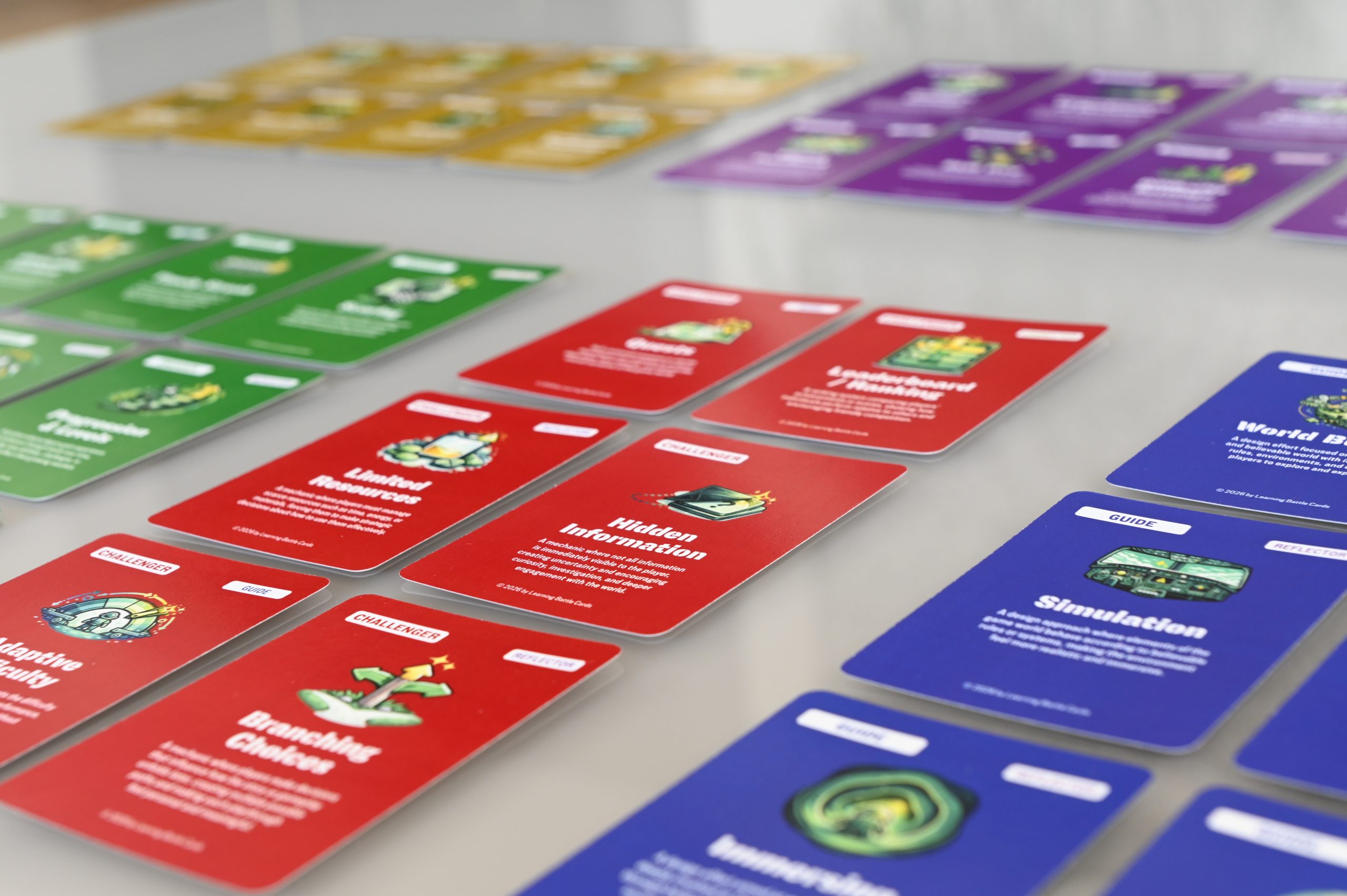
Game mechanics decoded
through the lens of learning design.
Every game mechanic does something specific to a learner — to their motivation, attention, thinking, or behaviour.
Gameducate Cards help L&D professionals understand exactly what each mechanic does to choose wisely.
LAUNCH OFFER
Order now and receive a metal card box
included at the regular price.
The first batch of Gameducate Cards comes with a metal storage box at no extra cost.
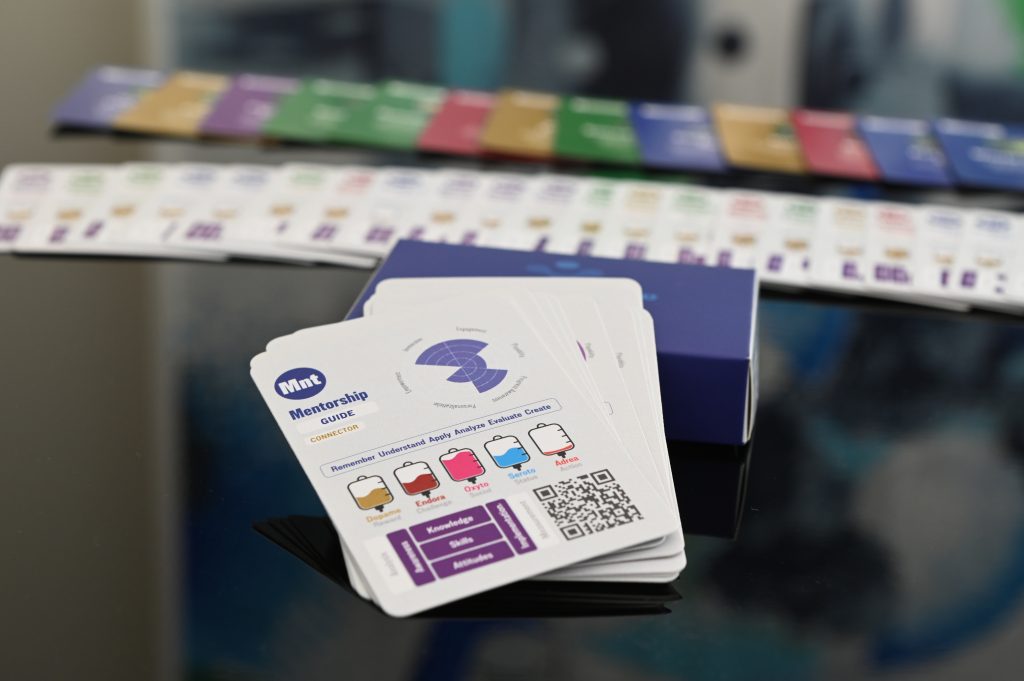
55 cards · metal card box · printed booklet · QR-linked extended content
Most gamification stops at engagement.
That’s where intentional learning design begins.
Game mechanics can challenge learners to think under pressure, guide them through complex territory, force them to confront the consequences of their decisions, or build the kind of reflective habits that change behaviour long after the training ends.
But only if the designer understands what each mechanic actually does — and chooses it for a reason.
How it works?

Learn
Start by understanding what each mechanic actually does in a learning context — not as a game feature, but as an educational instrument. Read through the deck, compare mechanics you thought you knew, and build a vocabulary of tools you can reach for with purpose.

Select
Filter the deck around your specific learning goal. Working alone, sort by class, Bloom’s level, or emotional state. Working with a team, use the cards as a shared language — concrete enough for stakeholders with no L&D background to contribute meaningfully. Either way, you end with mechanics chosen for a reason.

Design
Map selected mechanics to the stages of your L&D process. Decide which ones open the experience, which carry the middle, and which support transfer to real work. The result is a learning process where game mechanics aren’t decoration — they’re the reason it works.
What is Gameducate?
Gameducate Cards deconstruct game mechanics and present them from a learning design perspective.
They provide the key information needed to understand how each mechanic works, what impact it has, and how it can be used in practice.
This enables you to apply game design consciously — aligning mechanics with specific learning goals.
A thinking tool for learning designers
who take game mechanics seriously.
A thinking tool for learning designers
who take game mechanics seriously.
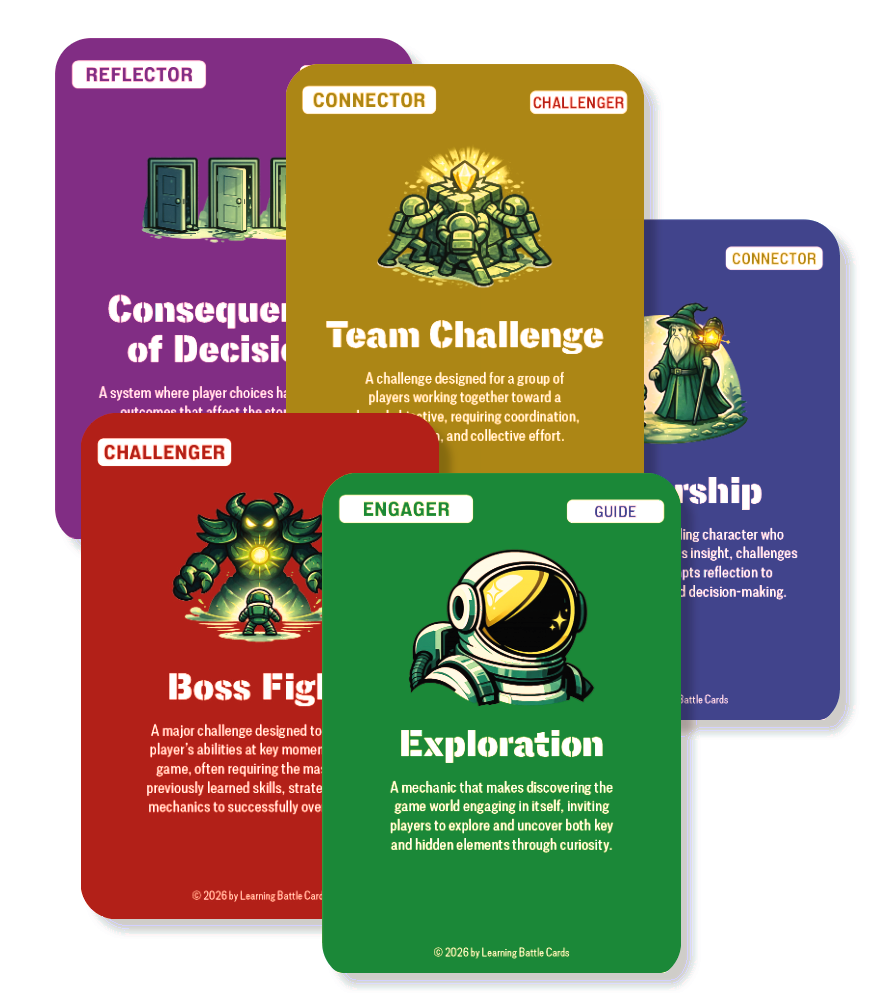
Each Gameducate Card represents a specific game mechanic — Boss Fight, Exploration, Team Challenge, Branching Choices, and dozens more. But where a game designer asks “will this mechanic keep players interested?”, Gameducate asks a different set of questions entirely.
For whom is Gameducate?
Gameducate Cards are designed for anyone who creates or influences learning experiences and wants to make them more engaging, effective, and meaningful.
They are especially useful for L&D professionals, instructional designers, trainers, educators, and consultants who look for new ways to activate learners and move beyond traditional formats. The cards support both everyday design work and more strategic thinking.
5
Card Classes
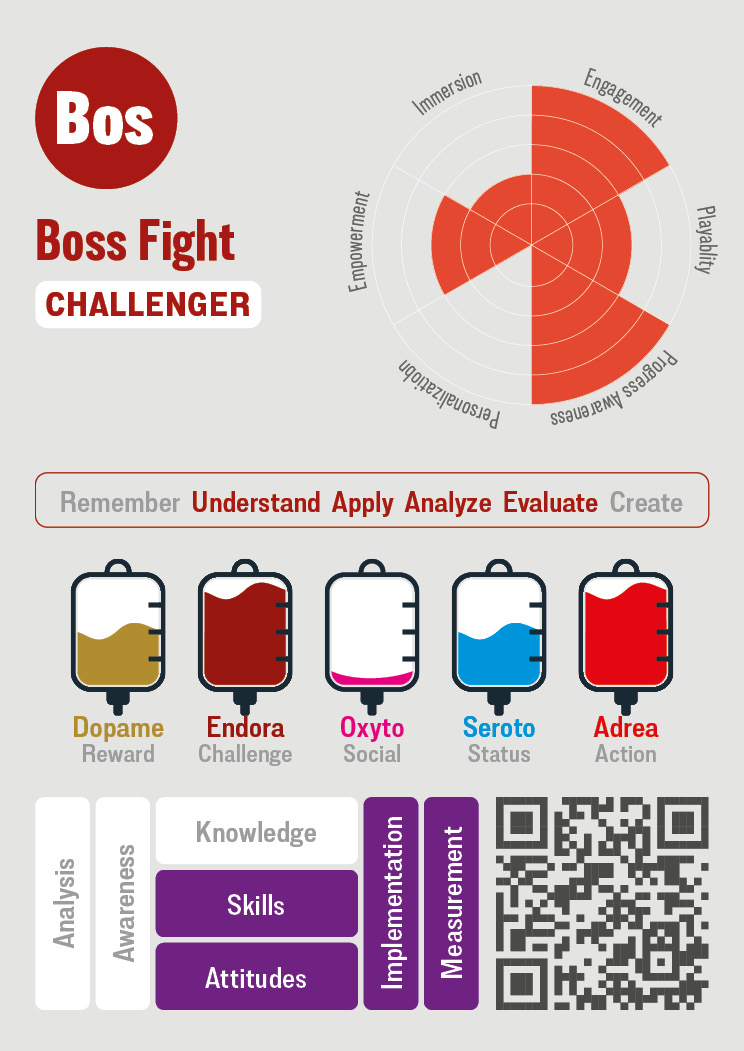
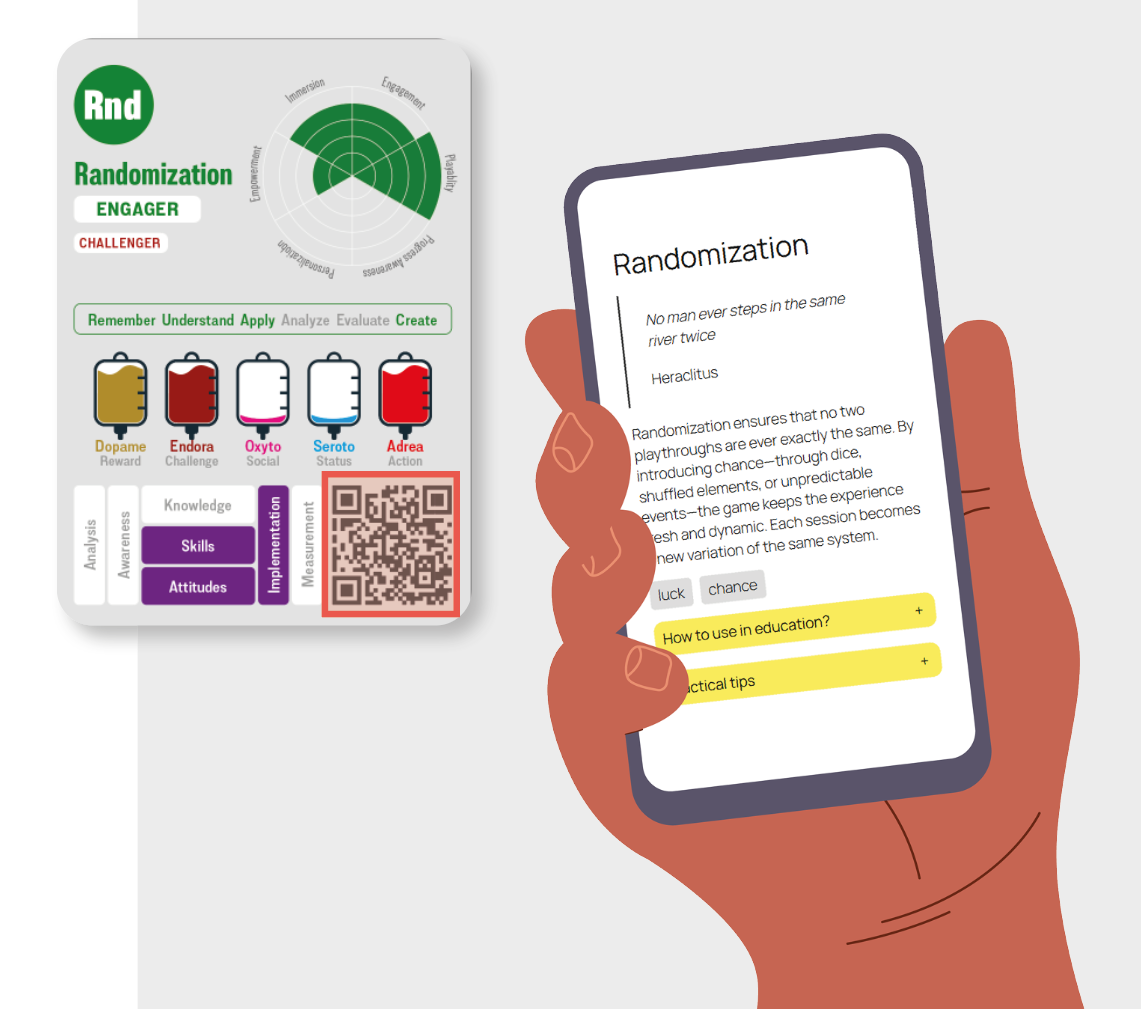
Know immediately whether a mechanic primarily engages, challenges, guides, connects, or reflects — so you can spot gaps in your design at a glance.
6
Powers
A visual radar chart shows how strongly each mechanic activates Engagement, Playability, Progress Awareness, Personalization, Empowerment, and Immersion.
5
Elixirs
Understand the emotional and psychological states each mechanic activates in learners like the anticipation of reward (Dopame), the satisfaction of overcoming difficulty (Endora) or the urgency of time pressure (Adrea).
6
Bloom Levels
See at a glance whether a mechanic supports recall, understanding, application, analysis, evaluation, or creation. Align your game layer with the cognitive depth your learning goals actually require.
7
Windows
Each card maps to the areas of the learning process it supports — from Awareness and Knowledge to Skills, Attitudes, Implementation, and Measurement. Design experiences that go beyond content delivery.
QR
Linked content
Every card includes a QR code that unlocks additional examples, educational context, and practical application tips. The deck evolves with your practice.
LAUNCH OFFER
Stop guessing. Start designing with proven engagement mechanics.
The first batch of Gameducate Cards comes with a metal storage box at no extra cost.
55 cards · metal card box · printed booklet · QR-linked extended content
Practical information
Each card includes a QR code that unlocks additional content — giving you deeper insight into the mechanic and how to use it in practice.
Behind the code, you’ll find extended explanations, method guidance, and practical tips for applying the mechanic in learning design.
Frequently Asked Questions
How will I know how to use Gameducate Cards?
Along with the deck, you’ll receive a booklet that explains different ways of working with the cards — from simple exercises to more structured design processes.
It helps you quickly move from understanding the cards to applying them in practice.
Who is this deck for?
Instructional designers, L&D professionals, learning strategists, training managers, and anyone responsible for creating engaging learning experiences. No game design background required.
Are the cards for online or offline learning?
Both. You can use them to design e-learning, workshops, blended programs, or any learning experience where engagement and effectiveness matter.
Can the cards be used with a team?
Yes — Gameducate Cards are a powerful tool for team collaboration.
They support idea generation, structured discussion, and co-creation of learning solutions, making them especially useful in workshops and design sessions.